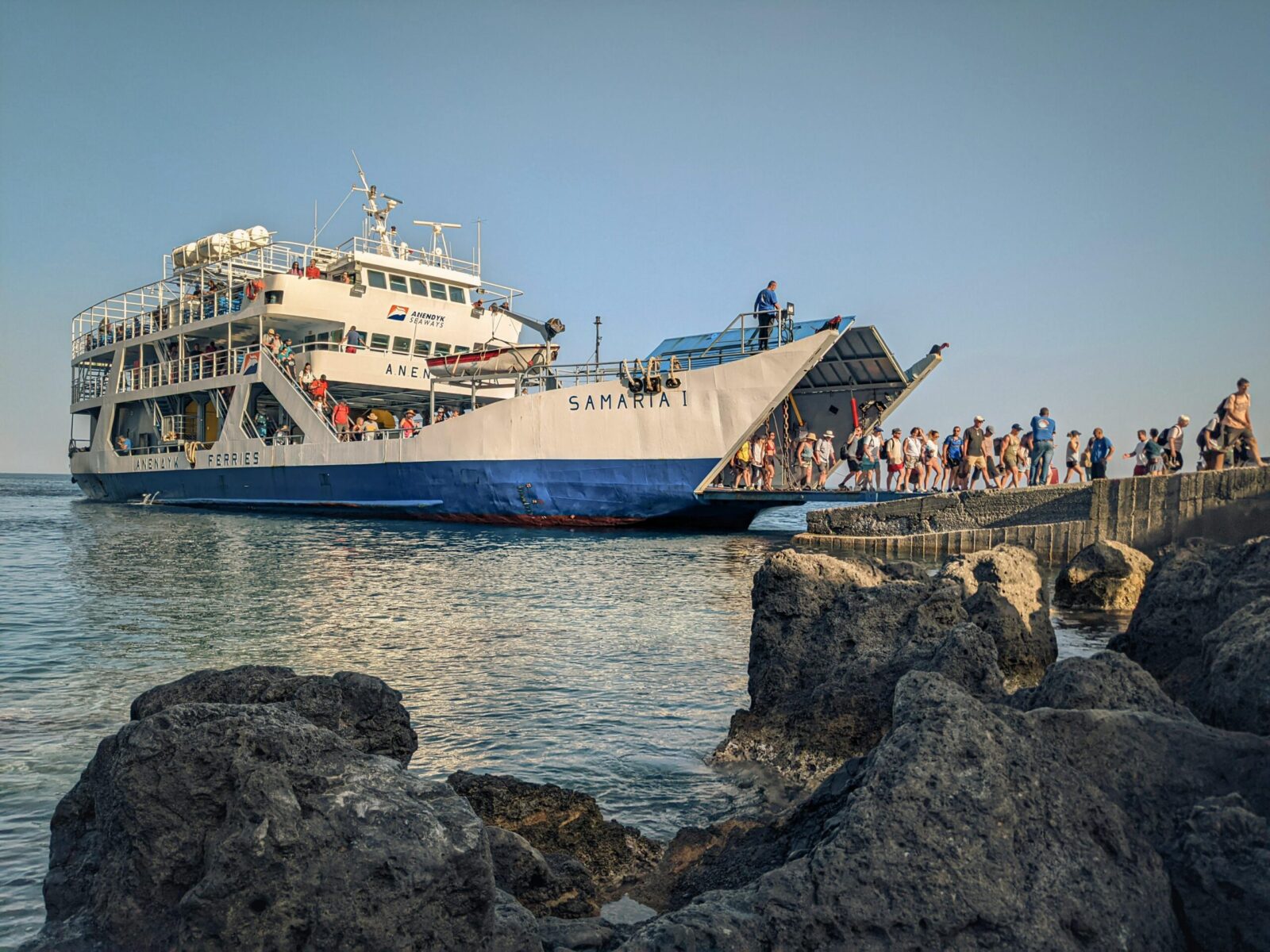
If you’re dreaming of turquoise Atlantic water, white-sand beaches, and pine-scented walking trails, but don’t want the crowds of the Mediterranean, then island hopping in the Rías Baixas is exactly your kind of trip.
This stretch of Galicia’s Atlantic coastline in northwest Spain is dotted with protected islands, small fishing towns, and a surprisingly easy-to-use ferry network. The catch? Each route has its own permits, seasons, and quirks, and fares can vary more than you’d expect.
This guide walks you through how to plan your route, which ferries to take, what you’ll pay, and how to avoid the common mistakes that can ruin an otherwise perfect island day.
Getting To Know The Rias Baixas And Its Island Chains
The Rías Baixas stretch roughly from Cape Finisterre down to the Portuguese border, with four main rías (estuaries): Muros e Noia, Arousa, Pontevedra, and Vigo. These deep inlets protect an archipelago of small islands that feel surprisingly wild compared with Spain’s better-known coasts.
When you talk about island hopping here, you’re mainly dealing with the Atlantic Islands of Galicia National Park and a few other protected islets:
- Illas Cíes (Cíes Islands) in the Ría de Vigo
- Ons Island in the Ría de Pontevedra
- Sálvora at the mouth of the Ría de Arousa
- Cortegada at the inner end of the Ría de Arousa
Each island has a different personality:
Illas Cíes – This is the poster child of the Rías Baixas. Praia de Rodas often appears on “world’s best beaches” lists: a curving sand bar joining two islands with unbelievably clear water. You’ll find marked hiking trails, viewpoints, and basic facilities in summer.
Ons – A little more low-key and lived-in, with a small village, simple restaurants, and great coastal walks. It feels less like a day-trip island and more like a slow, unhurried place to stay a night.
Sálvora – Wild, wind-exposed, and far less visited. You come here more for guided walks, birdlife, and a sense of isolation than for beach lounging.
Cortegada – Known for its laurel forest and proximity to the mainland. This is usually visited on guided or specialized routes rather than big commercial ferries.
Because many of these islands sit inside a national park, access is controlled. That’s where understanding ferry routes,permits, and fares becomes essential if you want to make the most of your island-hopping time in the Rías Baixas.
How To Plan Your Island-Hopping Trip
Before you start comparing ferry prices, you need to decide what kind of island-hopping trip you want. The Rías Baixas can work as a single long day out from Vigo or Pontevedra, but the experience is better if you give yourself at least two or three days.
Start with three questions:
- How much time do you have?
With one day, you’ll realistically see just one island (usually Cíes or Ons). With two or three days, you can visit both and perhaps add a guided visit to Sálvora.
- Which base will you use?
The main jumping-off points are Vigo, Cangas, Baiona, Sanxenxo, Portonovo, and Bueu on the coast, plus a few smaller ports for Arousa routes. Vigo is the most flexible base for Illas Cíes: Bueu or Portonovo are best for Ons: and ports around Ría de Arousa serve Cortegada and Sálvora.
- Are you traveling in high season?
July–August, weekends, and holidays are extremely popular. Daily visitor caps for the national park islands can sell out, and the cheapest ferry tickets go early. In shoulder season (May–June, September–early October), you’ll find fewer departures but more breathing room.
Once you’ve answered those, sketch a simple plan:
- 1 day: Cíes from Vigo or Cangas or Ons from Bueu/Portonovo.
- 2 days: One full day on Cíes + one day on Ons.
- 3+ days: Cíes, Ons, and a guided trip to Sálvora or Cortegada, using Ría de Arousa towns as a base for a night.
You don’t have to overcomplicate it. Just remember that you can’t easily hop directly from Cíes to Ons or Sálvora by public ferry. You’ll usually return to the mainland between islands, then board another ferry from a different port.
Because of the national park restrictions, you also need to think about permits at the same time you plan your routes. For Cíes and Ons, you must request an online visitor authorization for your specific date before you buy many ferry tickets. For Sálvora and Cortegada, your guided tour operator usually handles the paperwork for you.
Main Ferry Routes To The Rias Baixas Islands
Several companies operate ferries in the Rías Baixas (names change, but you’ll see operators like Mar de Ons, Naviera Nabia, and others). Timetables vary by season, so think of the routes below as the core patterns rather than exact year-round promises.
Illas Cíes Ferry Routes
Most boats to the Cíes Islands sail to Isla do Monteagudo / Praia de Rodas, the central landing point for visitors. In high season you’ll have multiple departures each day, with fewer in spring and early autumn.
Main departure ports:
- Vigo → Cíes: The most frequent and flexible route. In summer, you’ll usually find several morning departures and late-afternoon returns, giving you a full beach and hiking day.
- Cangas → Cíes: A solid alternative if you’re staying on the Morrazo Peninsula. Slightly fewer options than Vigo, but often similar prices.
- Baiona → Cíes: More limited departures, but convenient if you’re based in this historic coastal town.
Crossing time tends to be around 40–45 minutes depending on the port and sea conditions. Boats are fast catamarans with both indoor and outdoor seating.
In peak periods, it’s wise to book several days ahead, especially from Vigo. Boats to Cíes do sell out, and you can’t just show up at the dock assuming there’ll be space.
Ons Island Ferry Routes
Ons lies off the Ría de Pontevedra and is served primarily from the surrounding tourist towns.
Main departure ports:
- Bueu → Ons: One of the closest and fastest routes, often with the most departures during summer.
- Portonovo → Ons: Ideal if you’re based in Sanxenxo/Portonovo, a popular beach area.
- Sanxenxo → Ons: Seasonal and more limited but very convenient if you’re staying right in town.
- Occasionally Vigo → Ons: Some summers you’ll find direct routes, but it’s less consistent than the Cíes line.
The crossing takes roughly 40–45 minutes from Bueu/Portonovo. The main arrival point is the O Curro pier, near the small village and restaurants.
Ons is smaller and feels more intimate than Cíes, so even with multiple boats a day, it rarely feels as busy. Still, the same national park rules apply: you need a date-specific permit, and ferries on August weekends can fill up.
Sálvora Island Ferry Routes
Sálvora is more remote and doesn’t have standard, daily mass ferries like Cíes or Ons. Instead, you usually visit as part of a guided excursion that departs from ports around the Ría de Arousa.
Possible departure towns include O Grove, Ribeira, Aguiño, or A Pobra do Caramiñal, depending on the company and season. Trips to Sálvora often combine:
- The boat ride through the ría
- A guided walk on the island (you can’t just roam freely everywhere)
- Time to see its village ruins, lighthouse, and wildlife
Crossing times can range from 30 to 60 minutes depending on the port and sea conditions. Because these are organized tours, you’ll usually have to commit to a specific schedule for both outbound and return.
Cortegada Island And Other Smaller Routes
Cortegada sits deep inside the Ría de Arousa, close to Carril and Vilagarcía de Arousa, and is known for its laurel forest. Like Sálvora, this is normally a guided-visit destination rather than a simple there-and-back ferry.
You’ll find small-boat operators and excursion companies offering:
- Half-day trips to Cortegada with guided walks
- Combined ría tours that include mussel farms, Cortegada views, and sometimes short landings
There are also smaller islets and special-interest routes (birdwatching, photography, kayaking) that may stop at or circle around other islands. These are less about transportation and more about the experience, but they’re worth considering if you want a different angle on the Rías Baixas beyond the classic Cíes/Ons combo.
Fares, Tickets, And How To Save Money
Fares for island hopping in the Rías Baixas are generally reasonable, but they add up quickly if you’re taking several ferries in a short time.
For Cíes and Ons, you can expect typical high-season round-trip prices in the ballpark of a modest day excursion, think of it as the cost of a nice dinner out, not a full-blown cruise. Kids often pay a reduced fare, and small children are sometimes free or heavily discounted. Prices tend to drop a bit in shoulder season.
For Sálvora, Cortegada, and combined ría tours, tickets can cost more because they include guiding and are usually longer excursions. Still, if you treat them as both your transport and your main activity for the day, they’re solid value.
To keep your ferry costs down while island hopping in the Rías Baixas, focus on a few tactics:
- Book early in high season. The cheapest seats and promotional fares usually go first, and last-minute tickets can be more expensive, or simply unavailable.
- Check return times before you buy. Sometimes the cheapest ticket locks you into less convenient return hours, which might shorten your beach time or make for a long wait at the pier.
- Look for multi-trip or family discounts. Some operators offer reduced prices for children, groups, or multiple islands, especially if you book online.
- Travel outside peak weekends. Midweek ferries in June or September can be noticeably cheaper and much less crowded.
- Watch for extra fees. Most standard ferries include everything in the ticket price, but special excursions, onboard services, or parking at the port can raise your overall cost.
Always buy from official company websites or ticket offices on the port to avoid confusion and make sure your national park authorizations line up with your ferry tickets. Don’t forget to bring a copy (digital or printed) of your permit if it’s required for that island and date.
Practical Details: Permits, Schedules, And Onboard Tips
The part that often trips people up with island hopping in the Rías Baixas isn’t the boat itself, it’s the admin before you step onboard. Once you understand how permits and schedules work, the rest is easy.
Permits For Cíes And Ons
Because both Cíes and Ons are inside the Atlantic Islands of Galicia National Park, you’re subject to daily visitor limits. In practice, this means you need an online authorization for the exact day you plan to visit.
The process generally works like this:
- You request a national park permit online for your chosen island and date. You’ll receive a code if there’s space.
- You then buy a ferry ticket from an authorized company, using that code to complete the purchase.
If you’re staying overnight in the island campsites (when they’re open), you’ll usually book the campsite first, then the ferry. The campsite reservation acts as your authorization.
For Sálvora and Cortegada, your tour operator usually handles the permits. It’s still your responsibility to provide accurate names and ID details as required.
Schedules, Seasonality, And Weather
Ferry schedules to the Rías Baixas islands are highly seasonal:
- High season (roughly July–August): Multiple daily departures to Cíes and Ons from several ports, plus frequent Sálvora and Cortegada excursions.
- Shoulder season (May–June, September–early October): Fewer routes, mainly on weekends and holidays, but still enough choice from the main towns.
- Low season (late autumn–winter): Many public ferry routes stop altogether, or run only special trips on specific dates.
The Atlantic can be unpredictable. Strong winds or rough seas sometimes lead to cancellations or altered schedules, especially outside midsummer. When that happens, ferry companies typically reschedule you or offer a refund. To avoid disappointment, keep your island days slightly flexible if you can.
Onboard And On-The-Island Tips
Once you’re actually on the ferry, things are straightforward, but a few details will make your day much smoother:
- Arrive early at the port. Lines build quickly on sunny days. Getting there 30–45 minutes before departure keeps things stress-free.
- Bring layers. Even on hot days, the wind out on the ría can be cool. A light jacket or sweatshirt makes the crossing more comfortable.
- Protect yourself from the sun. The combination of wind and reflection off the water is brutal. Sunscreen, hat, and sunglasses are nonnegotiable.
- Pack water and snacks. Cíes and Ons have seasonal bars and restaurants, but prices are higher and opening times can vary. On Sálvora and Cortegada, you may have limited or no services.
- Respect the park rules. You’re in a protected area: stick to marked paths, take your trash back with you, and don’t disturb wildlife. Rangers do monitor behavior, especially on busy days.
If you’re prone to seasickness, sit outside near the stern and keep your eyes on the horizon. The crossings are short, but choppy days can still catch you off guard.
Conclusion
Island hopping in the Rías Baixas gives you a side of Spain that most visitors never see: Atlantic islands that feel almost tropical at first glance but are rooted firmly in Galician culture and protected nature.
Once you understand how the local ferry routes and fares work, planning becomes straightforward. Choose your base, pick one or two key islands, usually Cíes and Ons, then consider adding a more off-the-beaten-path excursion to Sálvora or Cortegada if time allows.
The main things you can’t leave to chance are your permits, tickets, and timing. Secure your authorization, book your ferries early in high season, and keep an eye on schedules and weather. Do that, and you’ll be free to spend your days exactly where you want to be: on a quiet trail above the Atlantic, or with your feet in the sand of a beach you’ll be talking about for years.
No responses yet