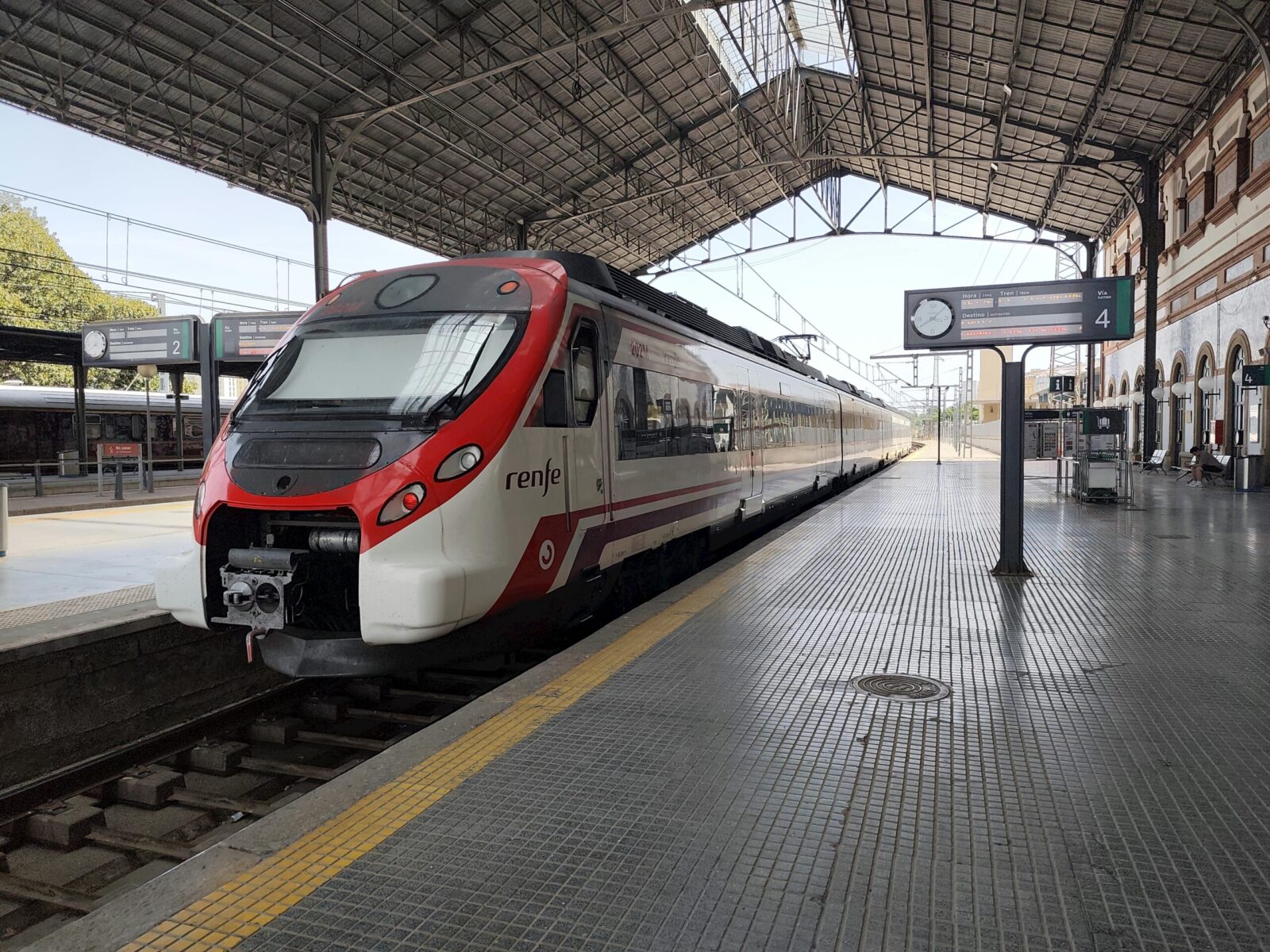
Trying to choose between Renfe, Iryo, and Ouigo for your Spain trip in 2026 can feel like comparing three different playbooks for the same game. All promise fast, modern high‑speed trains at good prices, but the value you get depends a lot on how you travel: your route, your flexibility, and how much comfort you want.
In this guide, you’ll see how Renfe vs. Iryo vs. Ouigo really stack up on price, speed, comfort, booking, and extras so you can decide which operator offers the best value for you in Spain in 2026, not just the lowest fare on paper.
How Spain’s High-Speed Rail Market Will Look In 2026
By 2026, Spain’s high‑speed rail market will be more competitive than it has ever been.
Renfe is still the legacy giant, running AVE, Alvia, and its own low‑cost brand Avlo on key high‑speed corridors like Madrid–Barcelona, Madrid–Valencia, and Madrid–Seville/Málaga.
Since liberalization, though, two big rivals have changed the game:
- Iryo (a private operator backed by Italy’s Trenitalia) focuses on comfort and frequency, with modern Frecciarossa‑style trains and a strong presence on the Madrid–Barcelona, Madrid–Levante (Valencia/Alicante), and Madrid–Andalusia axes.
- Ouigo España (part of France’s SNCF) operates a low‑cost model with very aggressive fares on routes such as Madrid–Barcelona and Madrid–Valencia/Alicante.
By 2026, you can expect:
- More trains and time slots on the major corridors as all three operators fight for market share.
- More stable, but still competitive pricing: the initial price wars of liberalization will likely calm a bit, but you’ll still see promo fares and dynamic pricing.
- Better digital tools: all three operators have been upgrading apps, payment options, and digital ticketing to win and keep you as a customer.
For you, the upside is clear: more choice, more departures, and lower average prices than a decade ago. The downside? You actually have to compare Renfe vs. Iryo vs. Ouigo instead of just clicking the only option.
Ticket Prices And Fare Structures Compared
Price is usually the first thing you check, but “cheapest” and “best value” aren’t always the same. Here’s how each operator tends to behave going into 2026.
Base Fares On Key Routes
Looking at headline prices, Ouigo and Renfe’s Avlo usually come out as the lowest, especially if you book in advance and travel off‑peak.
- Madrid–Barcelona: Ouigo and Avlo often advertise from around €9–€15 one way on promo: Renfe AVE and Iryo typically start higher but offer more comfort and flexibility. Last‑minute, the price gap shrinks.
- Madrid–Valencia / Alicante: All three compete here. Ouigo and Avlo tend to lead on low promos, but Renfe and Iryo often match or get close for off‑peak departures.
- Madrid–Andalusia (Seville, Málaga): This is Renfe’s stronghold, with Iryo moving in and Ouigo more limited. Low‑cost options (Avlo) are expanding, but Renfe still dominates the spread of prices.
By 2026, you should assume ultra‑low promo fares are limited in number and sell out fast. If you want those, you need to book early and be flexible with times.
Fare Types, Flexibility, And Refund Rules
Renfe, Iryo, and Ouigo all use tiered fare types. What really matters for you is how easily you can change or cancel.
- Renfe: Offers several levels (e.g., Básico, Elige, Prémium) and different rules across AVE/Avlo. The cheapest often don’t allow free changes and charge for refunds. Mid and top tiers can include free changes (plus fare difference) and partial or even full refunds.
- Iryo: Leans into simplicity and flexibility with branded classes (Inicial, Singular, Singular Only YOU, Infinita). Higher tiers often include very flexible change rules, some free catering, and access to lounges on certain tickets.
- Ouigo: Operates more like a low‑cost airline. Base fares are cheap but very restrictive. You’ll typically pay fees for changes, and refunds are limited or not available on the lowest tickets.
If your plans may change, Iryo and Renfe’s mid‑tier fares usually deliver better value than the rock‑bottom options from any operator.
Hidden Costs: Luggage, Seat Selection, And Extra Fees
This is where Ouigo and Avlo can surprise you.
- Luggage: Renfe’s classic AVE and Iryo are more generous with standard luggage. Avlo and Ouigo usually include just one small bag plus paid options for additional or larger suitcases.
- Seat selection: Cheap fares on all operators might assign random seats or charge a supplement for picking your spot. Iryo often includes more in higher classes.
- Onboard services: Food, changes at the station, printing tickets, or upgrading can come with add‑on prices, especially on low‑cost brands.
When you compare, look at the total trip cost: base fare + luggage + seat + any flexibility you truly need. For a light‑packing solo traveler, Ouigo or Avlo can win. For longer trips or heavy luggage, Renfe’s AVE or Iryo often end up better value even though the higher base fare.
Speed, Frequency, And Network Coverage
Value isn’t just euros: it’s also how much time and hassle you save.
Travel Times And Punctuality
Spain’s high‑speed lines are modern and fast, and actual travel times between operators on the same route are usually very similar.
- Madrid–Barcelona is commonly in the 2.5–3 hour range, whether you choose Renfe AVE, Avlo, Iryo, or Ouigo.
- Madrid–Valencia is around 1.5 hours, sometimes a little less.
- Madrid–Seville is about 2.5 hours, with Renfe and Iryo comparable when they share the line.
Where they can differ slightly is dwell time at stations and scheduling. Iryo and Renfe both emphasize punctuality: Ouigo too, but delays may feel more painful on low‑cost operators because of stricter ticket rules.
Spain’s high‑speed network has a strong reputation for on‑time performance, especially compared with air travel on the same corridors, and that should remain a key advantage in 2026.
Route Maps And City Coverage In 2026
By 2026, the rough picture looks like this:
- Renfe: The broadest network by far. Besides the big city pairs, Renfe connects more medium‑size cities and offers through‑tickets to conventional lines, giving you a one‑operator journey even if you need to leave the high‑speed corridor.
- Iryo: Focused on major high‑speed axes (Madrid–Barcelona, Madrid–Levante, Madrid–Andalusia). Coverage is narrower than Renfe but concentrated where demand is highest, which is probably where you’re traveling as a visitor or business traveler.
- Ouigo: Concentrates on a handful of high‑volume routes, with fewer branches and fewer intermediate stops. If you’re on one of those routes, you can get excellent value: if not, you might not see Ouigo as an option at all.
If you’re visiting secondary cities or need multi‑segment trips, Renfe’s wider coverage is often worth paying a bit more for.
Service Frequency And Peak vs. Off-Peak Options
Frequency is where Iryo and Renfe shine.
- Renfe: Still offers the largest number of daily frequencies overall. On core routes, you’ll usually find multiple departures per hour at peak times.
- Iryo: Competes hard on frequency on its main routes, often offering a dense timetable that’s very attractive if you want flexibility without paying flexible‑fare prices.
- Ouigo: Fewer trains per day. Great if the schedule matches your needs, but you have less room to adjust late or early without switching operators entirely.
For 2026, you can assume: if you care more about choosing the exact departure time than saving a few euros, Renfe and Iryo tend to offer better value.
Onboard Comfort And Passenger Experience
Comfort is where the “Renfe vs. Iryo vs. Ouigo” comparison really starts to separate.
Seating Classes, Space, And Comfort Levels
- Iryo: Generally viewed as the most “premium” overall. Its trains (similar to Italy’s Frecciarossa 1000) offer multiple classes with spacious seating, modern interiors, and quieter coaches. If you value comfort over the absolute cheapest fare, Iryo often hits the sweet spot.
- Renfe: AVE trains provide a solid, comfortable experience, especially in higher classes with 2+1 seating in first/business. Avlo is more compact and no‑frills, closer in feel to Ouigo.
- Ouigo: Low‑cost layout, higher seat density, and fewer frills. Perfectly fine for short hops if you just want a seat and Wi‑Fi, but not the most spacious option.
For longer journeys (3+ hours), your comfort per euro is often better with Iryo or Renfe AVE than with the bare‑bones low‑cost brands.
Wi‑Fi, Power, Food, And Other Amenities
By 2026, you can reasonably expect:
- Wi‑Fi: Available on all three, with reliability that’s usually good but can still dip in tunnels or remote areas. Iryo and Renfe often highlight better connectivity in higher classes.
- Power outlets: Standard in most high‑speed cars for all three operators.
- Food and drink: Renfe and Iryo typically offer a café bar and/or trolley service, plus included meals or snacks in top classes. Ouigo and Avlo provide basic paid options but no gourmet experience.
If you’re planning to work, stream, or just stay charged, all three are viable, but Iryo and Renfe’s higher classes are noticeably more pleasant.
Accessibility And Family-Friendly Features
Spain’s high‑speed trains are generally strong on accessibility, and the trend is moving in the right direction.
- Accessibility: All three operators offer designated spaces for wheelchair users, accessible toilets, and assistance services, though Renfe has the longest track record with its Atendo service.
- Families: Baby‑changing facilities and space for strollers are common. Quiet cars vary by operator and route: check when booking if that matters for you.
If you’re traveling with kids or anyone with reduced mobility, Renfe and Iryo usually provide a slightly smoother, more predictable experience than the ultra low‑cost setups, simply because they’ve invested more heavily in full‑service operations.
Booking Experience, Apps, And Customer Support
A bad booking experience can wipe out the joy of a bargain ticket.
Ease Of Booking And Managing Tickets
- Renfe: Historically clunky, but improving. Its website and app are more stable and user‑friendly than a few years ago, with digital tickets and QR codes standard. You may still run into occasional language or payment quirks.
- Iryo: From day one, focused on a clean, modern digital experience. Booking, seat selection, and managing changes via app or website are generally straightforward.
- Ouigo: Simple, low‑cost airline style flow. Easy for straightforward trips, but you’ll notice the upsells (bags, seats, etc.) as you move through checkout.
If you hate friction, Iryo often feels the most modern and intuitive, with Ouigo close behind for simple point‑to‑point bookings.
Customer Service Quality And Languages
All three operators offer support in Spanish: English is widely available, especially for phone and major station staff.
- Renfe: Larger organization and more touchpoints (stations, phone, counters). Quality can vary, but you’re rarely left without some way to get help.
- Iryo: Smaller but focused on service. Staff onboard often have strong language skills and a more “hospitality” mindset.
- Ouigo: Efficient but lean. Support is there, yet feels more transactional, and some issues must be handled online rather than in person.
If you anticipate needing assistance, for changes, disruptions, or travel with special needs, Renfe and Iryo tend to provide better overall backup.
Loyalty Programs And Perks In 2026
By 2026, loyalty programs matter more, especially if you visit or work in Spain often.
- Renfe Más (and related schemes): Lets you collect points and redeem them for future trips, with status tiers that unlock perks like lounge access or priority boarding on some services.
- Iryo: Positions itself strongly toward frequent travelers, with loyalty perks tied to flexibility, upgrades, and comfort, particularly attractive if you commute or do repeated business trips.
- Ouigo: More basic loyalty or promo‑code approach, focused on price rather than long‑term perks.
If you ride high‑speed trains in Spain regularly, Renfe and Iryo’s loyalty ecosystems can swing the value equation in their favor, even if a single Ouigo ticket looks cheaper.
Environmental Impact And Sustainability Credentials
All three operators benefit from the same big fact: high‑speed rail in Spain is far greener per passenger than flying or driving. Still, there are nuances.
Energy Efficiency And Emissions Per Passenger
Modern electric high‑speed trains offer very low emissions per passenger‑kilometer, especially on Spain’s relatively clean electricity grid.
- Renfe, Iryo, and Ouigo all operate modern, electric rolling stock designed for efficiency.
- High load factors (lots of seats filled) on competitive routes help drive per‑passenger emissions even lower.
From your perspective, choosing any of the three over a domestic flight massively reduces your carbon footprint: differences between them are far smaller than the difference between train and plane.
Green Initiatives And Future Fleet Plans
Where they start to differ is in branding and long‑term commitments.
- Renfe: Emphasizes decarbonization, energy‑efficient driving, and renewal of older fleets. Its scale means even small efficiency improvements have a big impact.
- Iryo: Highlights its modern, efficient trains and often communicates a premium, eco‑aware image, especially relevant if your company tracks business‑travel emissions.
- Ouigo: Plays up the idea of “more people on trains rather than planes” as its main green argument, getting many price‑sensitive travelers into high‑speed rail.
If sustainability is a priority for you in 2026, the crucial step is choosing rail at all. Between Renfe vs. Iryo vs. Ouigo, the differences are there, but they’re second‑order compared with that decision.
Best Value Picks For Different Types Of Travelers In 2026
So, who actually offers the best value in Spain in 2026? It depends who you are and how you travel.
Budget Travelers And Backpackers
If your top priority is the absolute lowest price, and you can travel light and be flexible:
- Ouigo and Renfe Avlo usually win on headline fares.
- You’ll need to watch baggage rules, avoid last‑minute changes, and accept fewer schedule options.
In this category, Ouigo often edges out Renfe and Iryo on price alone when it serves your route. But if Ouigo isn’t available or the schedule doesn’t work, Avlo is a strong alternative.
Families And Groups
Traveling with others changes the math.
You’ll care about:
- Reliable schedules and lots of departure options.
- Enough luggage allowance without very costly.
- Decent comfort for kids and older relatives.
Here, Renfe and Iryo tend to deliver better overall value:
- Renfe’s broader network and family deals can make it simpler to coordinate multi‑city trips.
- Iryo’s more comfortable interiors and flexible fares work well if your plans might shift.
You might still use Ouigo or Avlo for short hops or day trips, but for a full itinerary across Spain, Renfe plus Iryo usually feel less stressful.
Business Travelers And Frequent Commuters
If you’re working on board, traveling often, or need reliability and flexibility, price isn’t the only metric. You’ll care about:
- Punctuality, Wi‑Fi, and quiet space.
- Ability to change trains without huge penalties.
- Loyalty points and status perks.
On these criteria, Iryo and Renfe’s AVE/upper classes usually offer the best value:
- Iryo stands out for comfort, modern trains, and business‑oriented fare structures.
- Renfe adds massive route coverage, more frequencies, and a mature loyalty ecosystem.
Ouigo, while cheap, generally isn’t optimized for frequent business travel where changes and flexibility are vital.
Conclusion
Choosing between Renfe, Iryo, and Ouigo in 2026 isn’t about finding a single “best” operator: it’s about matching the right one to your style of travel.
- If you want rock‑bottom prices and you’re willing to trade flexibility and comfort, Ouigo (and Avlo) will often give you the cheapest ticket on competitive routes.
- If you want the widest network, more daily departures, and solid comfort, especially beyond the main corridors, Renfe still offers the most comprehensive value.
- If you want a premium‑feeling ride at competitive prices, with modern trains and strong digital tools, Iryo is hard to beat on major high‑speed lines.
For many trips, your best strategy is simple: compare all three for your dates and route, then factor in luggage, flexibility, and comfort, not just the base fare. When you do that, you’ll see that “best value” is often a close race, but the winner will be clear for your specific journey.
No responses yet