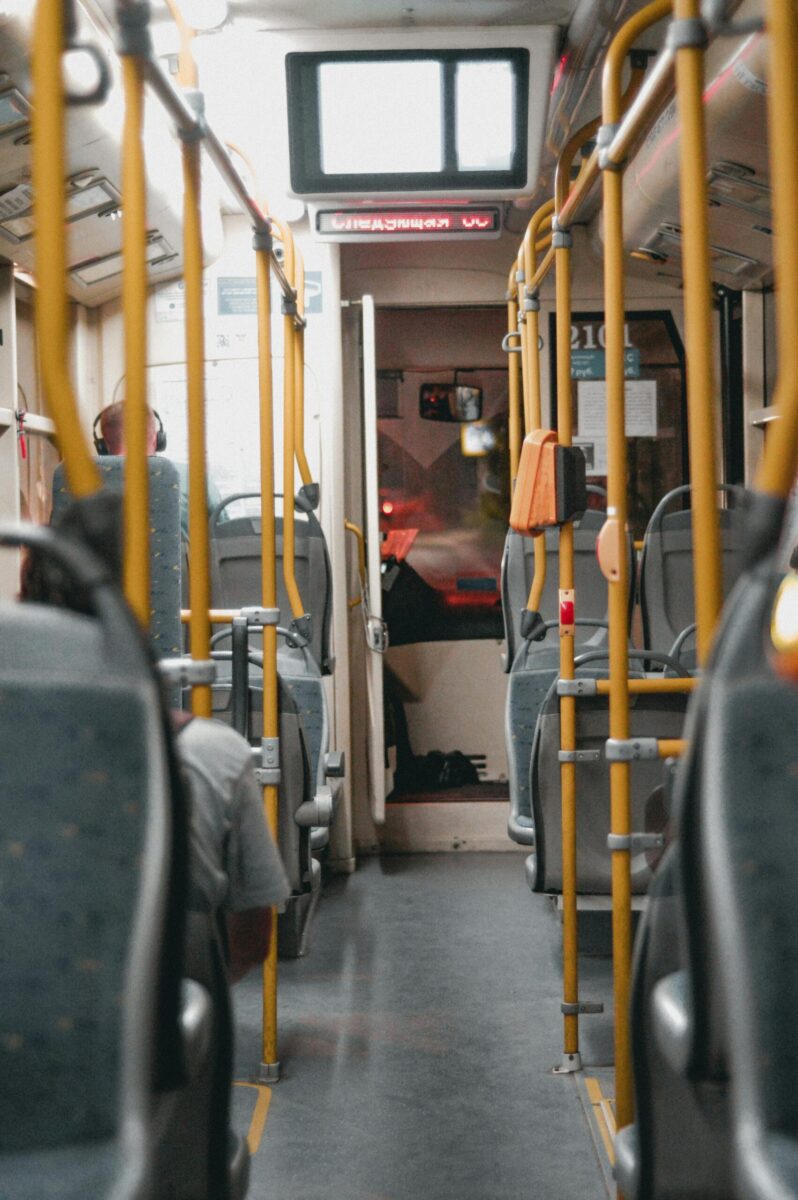
If you want to move around Vigo the way locals do, you need to learn how to use the Vitrasa bus system. Taxis and rental cars work, but they’re expensive and often slower in Vigo’s steep, narrow streets. Vitrasa, on the other hand, is cheap, frequent, and covers almost every corner of the city, from the port and Old Town to the beaches and the airport.
This guide walks you through everything you need to know: how the network is laid out, how to plan routes, how to pay, and exactly what to do from the moment you spot a green Vitrasa bus to the moment you get off at your stop. By the end, you’ll know how to use the Vitrasa bus system with the same confidence as someone who lives in Vigo.
Understanding Vitrasa And Vigo’s Bus Network
Vitrasa is Vigo’s official urban bus operator. When you see the green and white buses running up and down the hills, that’s Vitrasa. It connects residential neighborhoods, the industrial areas, the historic center, shopping zones, beaches, and Vigo Airport (VGO).
Unlike a city with a simple ring or grid, Vigo is built over hills and along the Ría de Vigo (the estuary). That means many lines twist and overlap, and some routes can feel a bit confusing at first. Don’t let that put you off. The system is actually quite logical once you know the basics:
- Trunk lines: These are frequent routes that connect major areas like the city center (Praza de España, Urzáiz, García Barbón, Colón), shopping zones, and big residential districts.
- Feeder and neighborhood lines: These dip into smaller streets and local barrios, often linking back to the main avenues.
You’ll also find:
- Airport line (often labeled “A”): Connects Vigo Airport with the city center. It’s the one you’ll probably use when flying in or out.
- University lines: Special services going up to the Universidade de Vigo campus on As Lagoas–Marcosende.
- Beach routes: In good weather, buses to Samil Beach and other coastal spots are packed with locals, especially weekends and summer.
- Night buses (Nocturnos): Reduced but useful night service on some main corridors, often labeled with “N”.
Once you accept that Vigo’s geography makes straight lines almost impossible, Vitrasa starts to feel like a flexible web that can get you almost anywhere with one quick change in the center.
Planning Your Route: Maps, Apps, And Timetables
You’ll save yourself a lot of time and wandering around if you plan your Vitrasa route for a specific trip, rather than guessing based on bus numbers.
Official Vitrasa tools
Start with the official information channels, because they reflect route changes, works, and seasonal timetables:
- Vitrasa website: You’ll find network maps, line-by-line timetables, and route descriptions. Look for the sections labeled “Líneas” or “Horarios”.
- Official app (if available when you visit): Vitrasa has provided its own mobile app or integrations. It typically includes live or approximate arrival times, nearest stops, and a route planner.
The exact app setup can change over time, so the safest move is to search “Vitrasa Vigo app” in your app store or check the official website for download links.
Using general transit apps
In practice, most visitors combine official info with familiar apps:
- Google Maps: Often supports Vitrasa as a transit option. Plug in your starting point and destination, choose the public transport icon, and look for Vitrasa bus proposals.
- Moovit or similar apps: These can give you line numbers, walking directions to stops, and estimated arrival times, often using crowd-sourced updates.
Use these apps to:
- Confirm which line(s) you need.
- See where to get on and off.
- Check how long you’ll be walking uphill or downhill, important in Vigo.
Printed maps and stop information
Central stops usually have:
- A list of lines serving that stop.
- A schematic map or at least a diagram of routes.
- Timetables with first/last buses and frequency.
In neighborhoods, you may only see a small sign with the stop name, line numbers, and a timetable sheet. Don’t expect a big shelter every time.
If you’re unsure, do what locals do: check the stop name on the sign, then type it into the Vitrasa website or app to verify which direction that line goes from that specific stop.
Timing and frequency
Vitrasa buses in Vigo are reasonably frequent on main lines, especially during weekday daytimes. But frequency changes by:
- Line type (trunk vs. neighborhood vs. university or beach lines).
- Time of day (rush hour vs. late evening).
- Day of week (weekday vs. Saturday vs. Sunday/holiday).
Always double-check the day column on printed timetables, Spanish schedules often separate Lunes–Viernes (Mon–Fri), Sábados (Sat), and Domingos y festivos (Sun & public holidays).
Tickets, Passes, And How To Pay On Vitrasa Buses
To really use the Vitrasa bus system like a local, you need to know your payment options. Prices and details can change, so treat this as a framework and confirm current fares before you travel.
Paying cash on board
You can usually pay the driver in cash when you board. Keep in mind:
- You pay per ride, with no free transfer unless stated otherwise by the current fare rules.
- Drivers may not accept large bills (for example, €20 and up) if they don’t have change.
- You’ll get a small paper ticket, keep it with you while riding.
Cash is simple, but it’s the least flexible option if you’re moving around Vigo frequently.
Using local transport cards (Passes)
Vigo has contactless transport cards (such as the commonly used local pass card) that residents and frequent users rely on. With these you typically:
- Tap the card on the reader when boarding.
- Benefit from a reduced fare compared with paying cash.
- Sometimes enjoy discounted or integrated transfers within a limited time window.
To get this kind of card you generally need to:
- Visit an authorized point (often kiosks, official offices, or designated sales points).
- Pay a small fee or deposit for the card itself.
- Load credit onto the card in advance.
If you’re staying longer than a few days or traveling as a group, it’s worth asking at the tourist office or checking Vitrasa’s website about the easiest card to obtain as a visitor.
Contactless bank cards and mobile payments
Some Spanish cities are rolling out contactless payment directly with bank cards or phones. Vitrasa has gradually updated its systems, but coverage can evolve over time.
Before you rely on it, check Vitrasa’s official channels to see whether you can simply tap your bank card or phone at the reader when boarding, and how the fare is calculated. If it’s supported, this is often the most convenient solution for short stays.
Where to buy or recharge passes
Look for:
- Tobacco shops or kiosks displaying transport card logos.
- Official sales points indicated on the Vitrasa site.
- Occasionally, automatic machines in central areas.
Don’t leave it to the last minute: recharge your pass when you’re already in the city center rather than in a far-out neighborhood with limited options.
Step-By-Step: Riding Vitrasa Like A Local
Once you’ve planned your route and decided how you’ll pay, using the Vitrasa bus system is straightforward. Here’s how to handle a typical ride from start to finish.
1. Find the right stop
Each stop has a name and normally a list of lines that serve it. In Vigo, it’s common to see stops on both sides of a main avenue with the same or very similar names, one for each direction.
Double-check:
- The direction of travel in your app.
- The street side and stop name.
- The line number on the sign.
If you’re not sure, ask someone at the stop:
“¿Este autobús va hacia… [your destination or landmark]?”
Most locals will happily confirm.
2. Signal the driver
In Vigo, the driver won’t always stop automatically if no one is clearly waiting for that particular bus. As your bus approaches:
- Step closer to the curb.
- Raise your hand slightly to signal you want to board.
It doesn’t need to be dramatic, just obvious enough.
3. Board and pay
Use the front door unless the bus is using a different boarding system. Have your payment ready before you step on.
You then:
- Tell the driver if needed (for example if you’re paying cash and need a single ticket).
- Tap your card or pass on the reader near the driver or the front door.
- Take your paper ticket if you pay in cash.
Don’t linger blocking the entrance: once you’ve paid or tapped, move into the bus.
4. Move inside and hold on
Vigo’s streets are steep and curvy. Even on a calm day, you’ll feel the gradients.
- Walk down the aisle if possible so others can board.
- Hold the handrails or straps, especially when the bus is crowded.
- If you’re carrying luggage (from the airport or beaches), keep it close to your feet or between your knees.
Priority seats at the front are reserved for elderly passengers, people with disabilities, and pregnant women. Leave those free if you don’t need them.
5. Track your progress
To avoid missing your stop:
- Watch the internal screen if the bus has one: many show the next stop.
- Follow along in your app’s map using GPS.
- Pay attention to audio announcements, if available.
When you’re 1 stop away from where you want to get off, get ready.
6. Press the stop button
To request a stop:
- Press one of the red “STOP / PARADA” buttons or pull the cord, depending on the bus model.
- A light will show that a stop has been requested.
Do this with a bit of notice, pressing at the last second on a steep downhill is a good way to annoy both the driver and your balance.
7. Exit by the correct door
Wait until the bus stops, then:
- Use the middle or rear door if that’s the normal exit.
- Step down carefully, curbs in Vigo can be high, and sometimes the pavement is uneven.
Once you’re out, don’t walk immediately in front of the bus: wait until it moves or you can clearly see oncoming traffic.
Key Lines And Practical Routes For Visitors
Line numbers and exact routing can change, but some patterns are consistent and especially useful when you’re visiting Vigo. Before riding, always verify the current line numbers and paths, but use this as a guide to what you should look for.
City center connectors
You’ll find multiple lines crossing through or near the most central areas:
- Praza de España, Urzáiz, Colón, García Barbón: These avenues and squares are classic reference points. Most trunk lines will touch at least one of them.
- Old Town / Casco Vello and port area: Buses that head towards the port or the maritime station are handy if you’re catching boats to the Cíes Islands or walking along the waterfront.
When planning, try to anchor your route around these central hubs: it makes transfers simpler.
Airport to city center
Look for the airport line (often signposted with “A”). In general, it:
- Runs between Vigo Airport and the city, stopping near important central zones.
- Is cheaper than a taxi and usually quick, unless you’re traveling at peak traffic times.
Make sure you know which central stop is closest to your accommodation, your hotel or apartment host can usually tell you which airport stop to use.
Vigo to Samil Beach
Samil is Vigo’s classic urban beach, and several Vitrasa lines connect the center with this area, especially in summer and on weekends.
You’ll typically:
- Board near the city center on a line with “Samil” clearly indicated on the front display.
- Ride along coastal or near-coastal roads until the bus drops you very close to the sand.
Summer timetables can add extra frequency, but also extra crowds, so give yourself more time.
University campus
If you’re visiting the Universidade de Vigo at As Lagoas–Marcosende, you’ll need a specific line heading up there (often clearly labeled as university or “CUVI” on maps and apps).
These buses:
- Run more frequently during term time, especially mornings and afternoons on weekdays.
- May have reduced service during holidays.
If you’re going for a conference or meeting, check both outbound and return times in advance, coming back down into the city late in the evening may require planning.
Industrial and shopping areas
Vigo has large industrial zones and shopping centers on the outskirts. Vitrasa normally has dedicated lines for:
- Industrial estates (polígonos): If you’re heading for work or a factory visit, note the first and last bus times carefully.
- Big malls: Expect direct lines from central Vigo, especially on weekends.
For these more specialized routes, rely on the official timetable, as frequency can be lower than in the city core.
Safety, Accessibility, And Riding Etiquette
Overall, Vitrasa buses in Vigo are safe, and locals of all ages use them daily. Still, a few habits will make your rides smoother and more comfortable.
Personal safety and belongings
Petty theft is not a major problem on Vitrasa, but like in any city:
- Keep your bag closed and in front of you in crowded buses.
- Avoid leaving phones or wallets in back pockets in standing-room-only situations.
- At night, sit where you feel comfortable, near the front if you prefer.
Vigo isn’t known for aggressive behavior on buses, and most rides feel routine and calm.
Accessibility
Vitrasa has progressively renewed its fleet with low-floor buses and ramps at doors, but accessibility can vary by line and bus model.
If you need step-free access or space for a wheelchair or stroller:
- Check the line information for accessibility indicators.
- Look for buses with a ramp symbol on the front or side.
- Ask the driver if you need the ramp deployed.
Inside, you’ll usually find:
- Reserved spaces for wheelchairs and strollers.
- Visual and sometimes audio announcements of stops, helping passengers with hearing or visual impairments.
Local etiquette and unwritten rules
To blend in with locals on Vitrasa, pay attention to a few unwritten rules:
- Queue loosely: People tend to form an informal line, but it’s not rigid. Just don’t cut in front of someone who was clearly waiting first.
- Offer seats: If you’re young and healthy, give up your seat to older passengers, pregnant women, or those with visible mobility issues.
- Keep noise reasonable: Normal conversation is fine, but avoid loud phone calls or music without headphones.
- No eating strong-smelling food: A coffee or small snack is usually tolerated: a full hot meal on a packed bus won’t be appreciated.
If you’re unsure what to do in a specific situation, a quick look at what other passengers are doing will usually guide you.
Common Mistakes To Avoid When Using Vitrasa
You’ll learn the system fast, but there are a few classic mistakes visitors make with the Vitrasa bus network in Vigo. Avoiding them will save you time, money, and stress.
- Getting on in the wrong direction: Because line numbers can serve both directions from nearby stops, it’s easy to board the right line going the wrong way. Always check the final destination shown on the front of the bus and compare it with your app.
- Assuming timetables are the same every day: Weekday, Saturday, and Sunday/holiday schedules can differ a lot. Make sure you’re reading the correct day column on printed timetables.
- Arriving at the stop exactly at departure time: In real life, buses can arrive a bit early or late depending on traffic and hills. Try to get there a few minutes in advance, especially on less frequent lines.
- Relying on large bills for cash payment: Drivers may refuse big notes if they don’t have enough change. Keep coins and small bills handy.
- Not pressing the stop button: If no one has requested the stop, the driver might continue without stopping. When in doubt, press early rather than late.
- Ignoring the hills: On a map, a “short walk” between stops can be straight uphill. If an app suggests walking 15–20 minutes in Vigo, consider whether a quick transfer might be kinder to your legs.
- Forgetting about the last bus: In peripheral areas or at night, the last Vitrasa bus can be earlier than you’d expect. Always check the time of the final departure toward your neighborhood or hotel.
Avoid these pitfalls, and you’ll find that using the Vitrasa bus system feels straightforward and reliable.
Conclusion
Learning how to use the Vitrasa bus system is one of the best favors you can do for yourself in Vigo. It opens up the whole city, from the hills to the harbor, without the cost and hassle of constant taxis. Once you understand how the network is structured, how to plan with maps and apps, and how to pay, you’ll be able to move around with the easy confidence of someone who lives here.
Where To Find Updated Information On Vitrasa
Because routes, timetables, and payment options can change, always verify details before your trip or just after you arrive. Your best sources are:
- The official Vitrasa website, for the latest lines, schedules, and any service notices.
- The official Vitrasa app or partner transit apps listed on the website.
- The Vigo tourist office, which can give you up-to-date leaflets, maps, and practical tips in person.
When in doubt, you can also confirm with locals at bus stops or in your hotel, most people in Vigo use Vitrasa regularly and can explain which line you need in plain terms.
Best Times Of Day To Use The Bus
To make your rides smoother, try to time them around Vigo’s rhythms:
- Morning rush (approx. 7:30–9:30) and evening rush (around 17:30–20:00) are the busiest, especially on routes into and out of the center and toward industrial zones.
- Late morning and early afternoon on weekdays are usually more relaxed and still well served.
- Summer weekends can be crowded on beach routes: leave earlier in the morning if you want a calmer ride to Samil.
With a bit of planning around these peak times and a quick check of current timetables, you’ll find Vitrasa to be a practical, budget-friendly way to explore Vigo, and you’ll navigate the city like someone who knows exactly where they’re going.
No responses yet