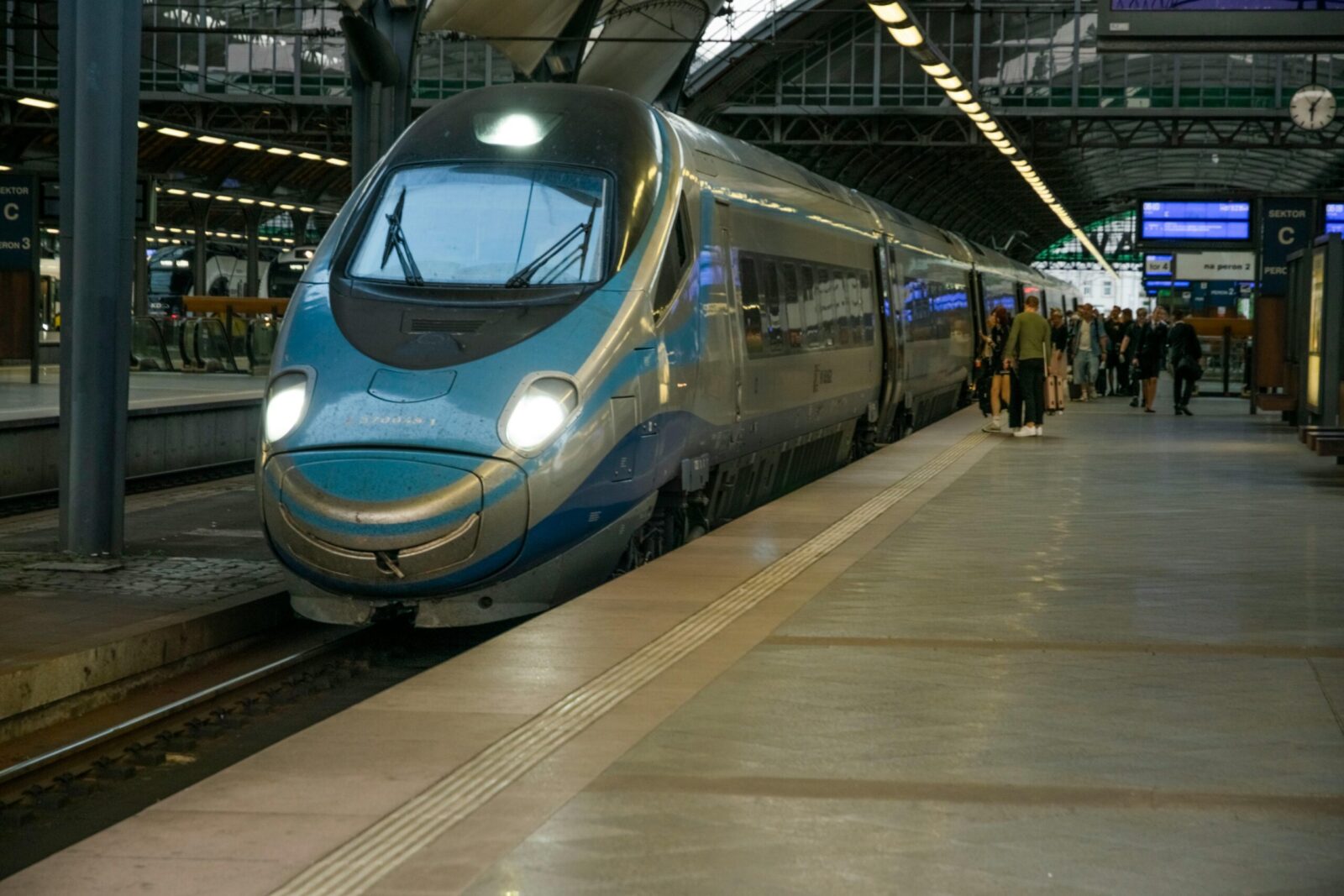
You’re planning to go from Vigo to Madrid and wondering if the train is worth it compared to flying or driving. On this route, Spain’s upgraded high‑speed network makes the train not just a scenic choice, but often the most relaxed and time‑efficient option door to door.
This guide walks you through everything you need: the types of trains between Vigo and Madrid, how the high‑speed sections work, exactly how to book the best fares, and what to expect on board. You’ll also get ideas for what to see along the way and how to make the most of your time once you roll into Madrid.
Why Take The Train From Vigo To Madrid?
Taking the train from Vigo to Madrid gives you a mix of comfort, views, and simplicity you rarely get with short flights.
You start in the heart of the city and arrive in the city too, no long airport transfers, no security lines that eat up an hour, and no liquids-in-a-bag routine. You board with your bags, find your seat, and you’re off.
You also get something that flying never offers: a front‑row seat to Galicia’s forests, river valleys, and the Castilian plateau as the train speeds toward Madrid. If you’re used to driving the A‑52 or A‑6, seeing the same landscapes from a high‑speed train feels completely different, calmer, quieter, and you’re not the one dealing with traffic or mountain weather.
On top of that, the Vigo–Madrid route is well integrated into Spain’s high‑speed network. Journey times have dropped dramatically in recent years as more of the line has been upgraded, so you can realistically treat this as a medium‑distance hop rather than an all‑day slog.
Understanding Your Train Options
Before you book, you need to understand what’s actually running between Vigo and Madrid and how the train names translate into real differences for you.
Types Of Trains On This Route
Most Vigo–Madrid services are operated by Renfe and fall under the Alvia category. Alvia trains combine high‑speed capability on upgraded lines with conventional speed on older stretches. In practice, that means:
- High‑speed running on the AVE line between Ourense and Madrid.
- Slower but still comfortable travel between Vigo and Ourense where the infrastructure is still being improved.
You may also see Intercity or Media Distancia connections on some dates, sometimes requiring a change at Ourense. They’re usually a bit slower and may be cheaper if you book late.
At the moment, low‑cost high‑speed brands like OUIGO and Avlo don’t originate in Vigo, so for a simple, direct Vigo–Madrid trip you’ll almost always stick with Renfe Alvia.
If you’re browsing third‑party sites (Trainline, Omio, Rail Europe), the naming sometimes gets simplified, but if you see a direct Vigo–Madrid train with around 4–5 hours journey time, you’re looking at the right service.
High-Speed Rail Basics On The Vigo–Madrid Route
The Vigo–Madrid rail trip is a hybrid: part classic line, part true high‑speed, but the overall experience feels like a modern long‑distance service.
Typical Journey Time And Frequency
Right now, the direct Vigo–Madrid journey typically takes around 4 to 5 hours, depending on the specific departure and day of the week. Morning and afternoon trains tend to be the fastest: evening services can have slightly longer schedules or an extra stop.
Frequency isn’t like the dense Madrid–Barcelona corridor, but you still get a decent choice. Expect a few direct services per day, with additional options if you’re willing to change at Ourense. When you search dates a month or two ahead, you’ll usually find at least:
- One morning departure from Vigo.
- One mid‑day or early afternoon option.
- Occasionally an evening departure.
Schedules can shift slightly with seasonal timetables, so always check your specific travel date rather than assume yesterday’s departure pattern will match tomorrow’s.
Key Stations: Departing Vigo And Arriving In Madrid
You need to pay attention to station names at both ends of this route.
In Vigo, there are two relevant stations:
- Vigo‑Urzaiz: The newer, largely underground station used by most high‑speed‑compatible services, including many Alvia trains toward Ourense and Madrid.
- Vigo‑Guixar: The older station closer to the port. Some long‑distance services still use it, especially if timetables are being adjusted.
Always double‑check which Vigo station is on your ticket so you don’t turn up at the wrong one.
In Madrid, Galicia‑bound and Galician arrivals typically use Madrid Chamartín–Clara Campoamor. This is on the north side of the city, directly linked to:
- Cercanías suburban trains, including fast links to Madrid Puerta de Atocha–Almudena Grandes and key neighborhoods.
- Metro lines 1 and 10, which get you into the city center quickly.
Some services or future timetable tweaks may route certain trains to or through Atocha, but if you see “Madrid Chamartín” on your booking, assume it’s correct and plan your onward journey from there.
How To Book Your Tickets (Step By Step)
You can book Vigo–Madrid train tickets entirely online, and doing it right will save you money and hassle.
Where And When To Book For The Best Fares
You have two main booking approaches:
- Direct with Renfe (renfe.com or the Renfe app). You’ll usually get the widest range of fare types and promotions, plus Spanish‑specific discounts like youth or senior cards.
- Through an international reseller such as Trainline, Omio, or Rail Europe. These can be easier to use in English, and they consolidate all options into a clean interface, but sometimes add small fees.
For the best prices, try to:
- Book early: When sales open (often a few months ahead), the cheapest “Basic” or promo fares are available. As seats fill up, prices climb.
- Avoid peak days: Fridays, Sundays, and Spanish holiday periods see higher demand. Mid‑week and Saturday can be cheaper.
As a rough rule, if you’re traveling in peak season, aim to book 2–4 weeks in advance. Off‑season, you can leave it a bit later, but waiting until the last few days often means paying more.
Understanding Ticket Types And Flexibility
Renfe has been simplifying its fare names, but you’ll still see a few categories on Vigo–Madrid trains:
- Básico / Basic: Usually the cheapest. Limited or no changes and refunds. Good if your plans are set.
- Elige / Choose: Mid‑range fare with more flexibility. You may be able to change your train by paying the fare difference and/or a small fee.
- Premium or similar names: Highest flexibility, best conditions for changes and refunds, and sometimes extra services included.
On international booking sites, these may simply be labeled as “non‑flexible,” “semi‑flexible,” or “flexible.” Read the conditions carefully before you click buy. If you think you might change time or date, paying a bit more upfront often costs less than throwing away a non‑refundable ticket.
Using Rail Passes Or Discount Cards
If you’re doing more rail travel in Spain, you can look at:
- Spain Pass (Renfe Spain Pass): A pass for multiple medium and long‑distance journeys within a set period. Great if you’ll be hopping between several cities.
- Tarjeta Dorada (Golden Card): For travelers 60+ (or qualifying conditions), giving percentage discounts on many trains.
- Youth and regional cards: For residents and younger travelers, sometimes offering big savings but often tied to residency.
For a one‑off Vigo–Madrid journey, you’re normally better off just buying a regular advance ticket. Passes and cards pay off when you stack several medium‑ or long‑distance trips within your stay.
Choosing The Best Schedule, Seat, And Class
Once you understand the options, you can fine‑tune your Vigo–Madrid journey for comfort and convenience.
Best Departure Times For Different Travelers
Your “best” departure depends on how you travel:
- Early morning: Ideal if you want a full afternoon and evening in Madrid. You leave Vigo after breakfast and can be in your hotel by mid‑afternoon.
- Mid‑day / early afternoon: Good if you prefer a relaxed start and daylight views. You’ll see more of the scenery through Galicia and Castilla y León.
- Evening: Works if you’re squeezing in a last morning in Vigo or connecting from elsewhere. Just be sure your Madrid arrival time still lines up with check‑in, metro hours, or connecting transport.
If you’re catching a same‑day flight from Madrid, build in a solid buffer between your train arrival and airport check‑in. While Spanish high‑speed trains are generally punctual, delays can happen, and you don’t want to test the limits of your stress levels.
Seat Selection: Window, Aisle, And Quiet Areas
On Vigo–Madrid Alvia trains, seat reservations are usually included. When booking, you can often:
- Pick window vs aisle: Window seats are great for the scenery between Vigo and Ourense and across the plateau: aisle seats are easier if you move around a lot.
- Choose direction of travel: Some systems show seat maps that indicate which way the train faces, though this isn’t always guaranteed because train sets can be reversed.
If you’re sensitive to noise, look for quiet‑zone cars if they’re offered in your booking flow, or at least avoid seats near doors and café cars. Families often gravitate to those areas.
Comparing Standard And First Class
Renfe’s long‑distance categories vary slightly by train type, but you’ll typically see two main comfort levels:
- Standard / Turista: Comfortable, modern seats, good legroom, access to Wi‑Fi and power outlets on most trains.
- First / Preferente or similar: Wider seats, more space, fewer people per coach, and sometimes extra services depending on the specific train and fare (such as access to club lounges in some stations or included food on certain routes and fare types).
On a 4–5 hour Vigo–Madrid ride, moving up to first class can be worth it if you value quiet, need to work, or just want more space. If price is your main concern, standard class is absolutely fine for this distance.
What To Expect On Board: Comfort, Food, And Connectivity
Knowing what’s on the train helps you pack and plan your day properly.
Luggage Rules And Packing Tips
One of the biggest advantages of going from Vigo to Madrid by train is how relaxed the luggage rules are compared with flying. On Renfe long‑distance trains you can usually bring up to three pieces of luggage with generous size and weight limits (commonly up to 25 kg total and a combined size limit), but staff rarely weigh bags unless they’re obviously oversized.
That said, you still want to pack smart. Overhead racks and end‑of‑coach luggage shelves fill up quickly, especially on busy days. Use sturdy, clearly labeled bags you can lift yourself, and keep valuables in a small daypack you can keep at your feet.
Onboard Services: Wi‑Fi, Power Outlets, And Dining
Most Alvia trains on this corridor come equipped with power outlets at or near your seat, which makes it easy to keep your phone and laptop charged. Wi‑Fi is increasingly available, though performance can fluctuate in tunnels or more remote stretches. If you need reliable connectivity, download key documents and offline maps in advance and treat the onboard Wi‑Fi as a bonus, not a guarantee.
You can usually find a café car or at least trolley service with drinks, coffee, and light snacks. The selection is perfectly fine for a small meal but not exactly gourmet, so if you’re picky or on a budget, grab a sandwich or salad at the station in Vigo before boarding.
The climate control is generally good, but coaches can sometimes feel cooler or warmer than expected, so it’s smart to have a light layer handy.
Staying Safe And Comfortable During The Trip
Spanish long‑distance trains feel very safe, but simple habits will make your journey smoother:
- Keep passports, tickets, and electronics in a small bag you don’t leave unattended.
- If you store bigger bags on the luggage racks, tuck valuables deep inside or keep them with you.
- Stay hydrated and stand up to stretch occasionally: on a 4–5 hour ride your body will thank you.
You’ll also get regular onboard announcements (usually in Spanish and often English) for major stops and connections, so you can relax without constantly checking the map.
What To See Along The Way And When You Arrive
The Vigo–Madrid line isn’t just a way to get from A to B. If you pay attention to what’s outside the window, and what’s around the stations, you can turn it into part of your trip.
Scenic Highlights Between Galicia And Madrid
Leaving Vigo, you quickly move through green hills, river valleys, and small Galician towns. The stretch between Vigo and Ourense can be especially pretty, with glimpses of the Miño and Sil river areas, vineyards, and mountain profiles that feel a world away from Madrid’s plains.
As you cross into Castilla y León and approach Madrid’s orbit, the landscape opens up into the Castilian meseta: broad fields, scattered villages, and the occasional distant church tower. It’s a quiet, understated beauty that contrasts sharply with Galicia’s dense greenery.
If you’re traveling in daylight, keep your camera or phone handy. You don’t need to be glued to the window, but glancing up from your book every so often will reward you.
What To See Near Madrid Chamartín And Atocha
Once you arrive in Madrid Chamartín, you’re not far from some great sights even before you jump into the full city center.
Near Chamartín, you can:
- Head toward the Cuatro Torres Business Area, with its skyscrapers and modern architecture.
- Ride the metro or Cercanías three or four stops to reach central neighborhoods like Sol or Gran Vía, where Madrid’s classic energy hits you immediately.
If your journey continues via Atocha (either by a connecting train or because your Vigo–Madrid service uses the tunnel), you’ll be steps from:
- The Reina Sofía Museum, home to Picasso’s Guernica.
- The Prado Museum and Thyssen‑Bornemisza, a short walk away.
- The green spaces of El Retiro Park, ideal for stretching your legs after the train.
Suggested Itineraries After You Arrive In Madrid
How you structure your time in Madrid after the train depends on when you arrive and how energetic you feel:
- Arriving around midday: Drop your bags at your hotel, grab a menú del día lunch near La Latina or Huertas, then spend the afternoon exploring the historic core, Plaza Mayor, Puerta del Sol, and a sunset walk to Templo de Debod for city views.
- Arriving in the afternoon: Focus on one big attraction, maybe the Prado or a guided walk through the old town, and then an evening of tapas in Cava Baja or Malasaña.
- Arriving late: Keep it simple. Check in, have a relaxed dinner close by (Madrid eats late, so you’ll still find options), and save the museums for the next day.
Because you’ve arrived by train, you’re already inside the city. You don’t lose time to airport shuttles or long taxi rides, so it’s surprisingly easy to squeeze “an extra half‑day in Madrid” out of your Vigo–Madrid journey.
Conclusion
Traveling from Vigo to Madrid by train gives you a rare combination: a fast connection that still feels like travel rather than transit. You avoid the stress of airports and the fatigue of long drives, you see a slice of northern Spain many people simply fly over, and you arrive right where you want to be, inside Madrid, ready to explore.
If you understand the types of Vigo–Madrid trains, book a smart fare a few weeks ahead, choose the schedule that fits your style, and know what to expect on board, you’ll set yourself up for an easy, comfortable trip. From there, what you do with the extra energy you saved, an impromptu museum visit, a long tapas crawl, or simply a quiet stroll through Madrid’s streets, is up to you.
No responses yet